

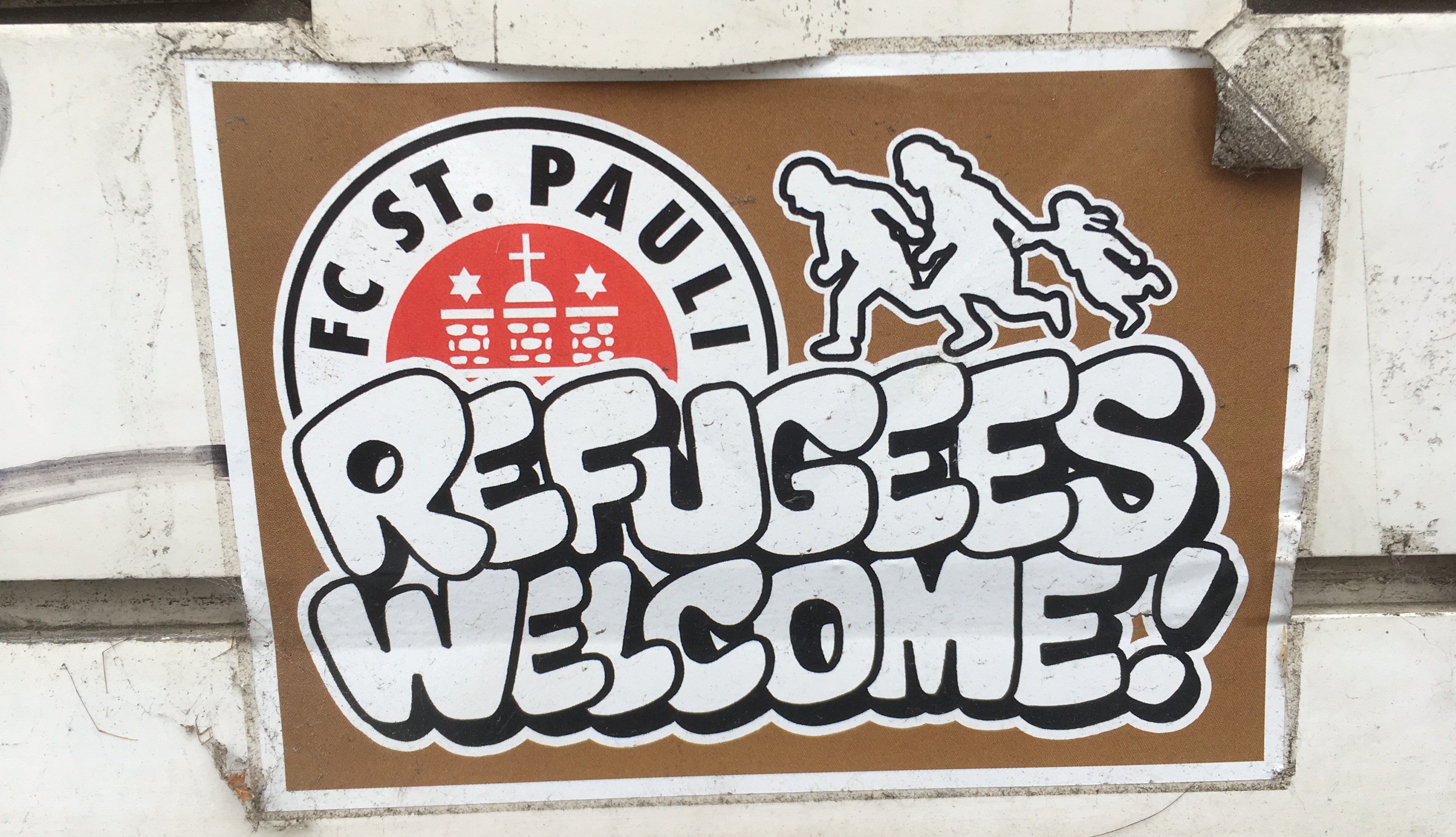
Welcome all refugees. Fuck the Nazis. Anti-homophobia flags aplenty. Less about the match result, more about the joy that comes with the occasion. Welcome to match day at FC St. Pauli’s Millerntor-Stadion.
As you approach the stadium, you’re greeted by graphically trippy images and the bold print of Millerntor-Stadion. With a polar vortex swallowing most of Europe, snow surrounds the iconic stadium, adding to its mystical allure.

The Millerntor-Stadion, a stone’s throw from the docks and the infamous Reeperbahn red-light district, is home to football’s most passionate left-wing supporters.
Three decades ago, members of St. Pauli’s squatting community first gathered behind the manager’s dugout, chanting against fascism and racism. From that point on, FC St. Pauli’s fan base became synonymous with punk culture and left-wing ideals, declaring that everyone would be welcome at the Millerntor.
They adopted the skull and crossbones flag, which remains a central symbol of the club’s globally recognised identity. This symbol attracted new supporters – fans who rejected the neo-Nazi undertones present elsewhere in football at the time.
Over the years, the fans have also acted as the club’s saviors. When the club faced financial trouble, supporters organized fundraising initiatives like Drink for St. Pauli, where local landlords donated 50% of beer sales to the club. Here, the connection between the club and its fans is more than support – it’s a community, a perfect hand-in-glove fit.
On the cards this day was a local derby against Holstein Kiel, a club located just 30 km from St. Pauli. I arrived two hours before kick-off—despite the unexpected chaos of the morning.
I had caught an early 7 a.m. train from Berlin to Hamburg. All seemed to be going smoothly—until, as often happens, complacency crept in. Twenty-seven miles east of Hamburg, a minor accident on the line brought the train to a halt. Everyone was told to disembark—the train was going no further.
Hoping to find some form of civilisation, I quickly realised how isolated I was. Büchen, the town where we were stranded, felt frozen in time. No open businesses. No taxis in sight. The next train wasn’t due for hours, and the streets were eerily empty.
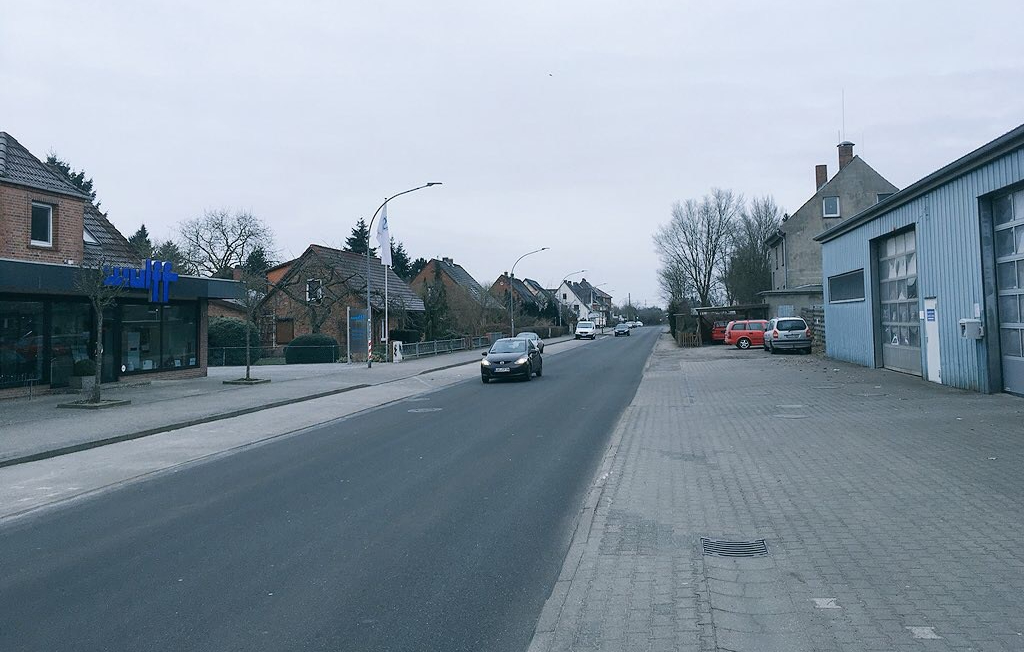
I spotted a small garage about 500 yards from the station. Inside, I met a fellow stranded passenger who kindly offered to share a taxi to Bergedorf – a small town where I could catch the U-Bahn to Hamburg.
My savior, an ukulele teacher rushing to a lesson, helped me avoid disaster. When we reached Bergedorf, the taxi meter read €80 – split between four passengers, it wasn’t too bad considering I was in real danger of missing the match.
Out at Bergedorf, I made my way to the U-Bahn – only to find the same error message flashing on the boards. The disruption was affecting this line too. Another taxi was needed.
Finally, I arrived in St. Pauli with the Millerntor’s rough edges in sight. My ticket, arranged through FC St. Pauli’s Fanladen initiative, was waiting.
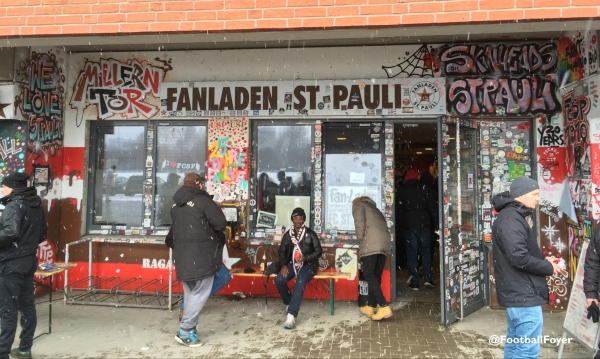
Founded 25 years ago, Fanladen St. Pauli is based at Heiligengeistfeld, near the Gegengerade stand of the Millerntor. The Fanladen serves as the hub for St. Pauli’s global fan community, helping both local and international supporters secure tickets and navigate match day.
More than 200 St. Pauli fan clubs exist worldwide, driving growing demand for tickets. What makes the Fanladen unique is its independence from the club, allowing it to represent fans without commercial or political pressure.
Despite this independence, Fanladen staff are members of various club committees, ensuring that fan interests are always represented. This close collaboration is part of what makes FC St. Pauli unique.
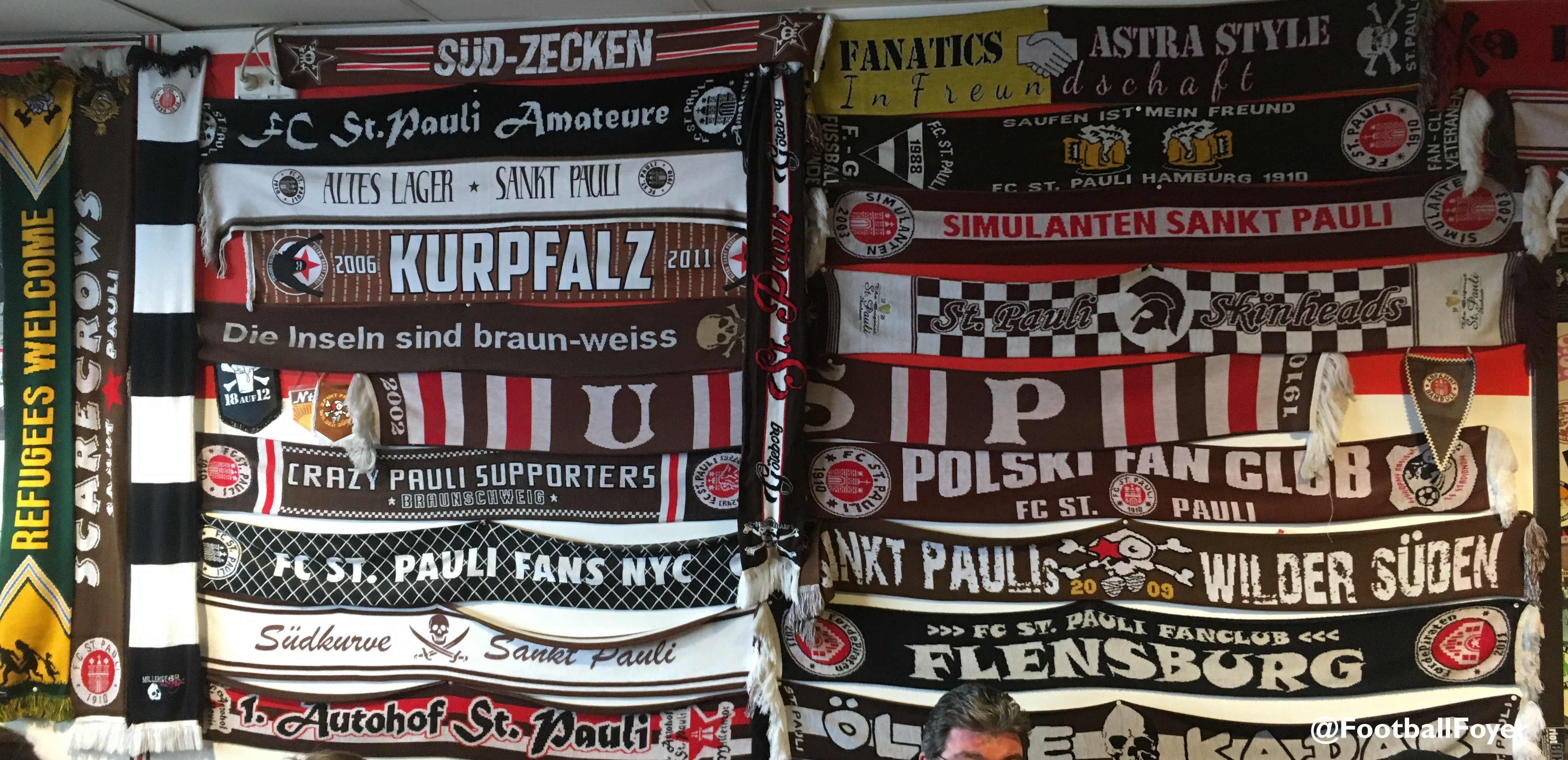
Inside the Fanladen, you immediately sense its distinct identity. A small soup kitchen supports the homeless, while tables are covered with stickers—from fan club logos to calls for marijuana legalization and anti-racism messages.
Ticket in hand (€13.50), I headed out to soak in the atmosphere around the stadium.
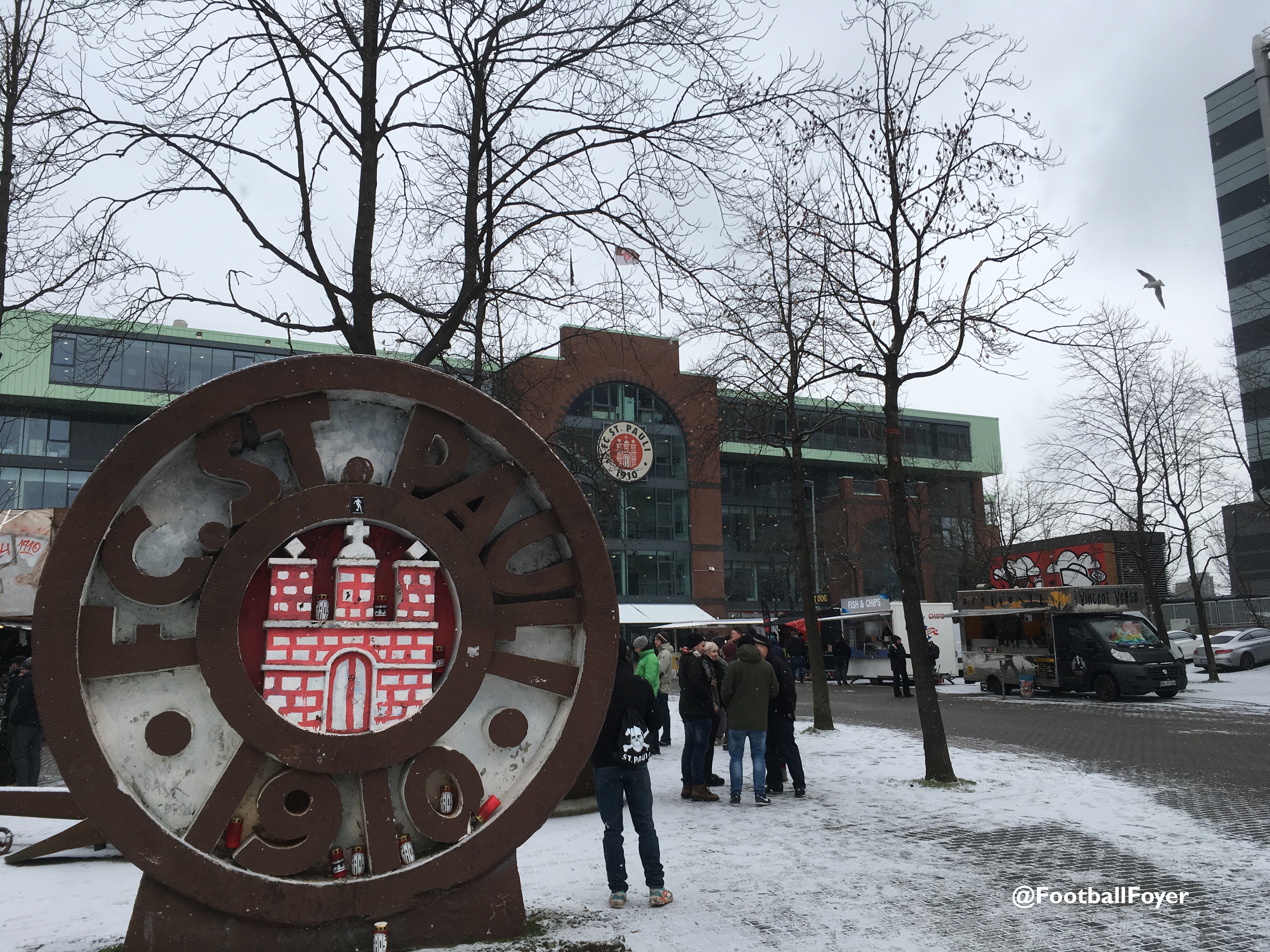
A large stone club emblem stands like a shrine amid currywurst stalls and booths run by the USP (ultra group) and Greenpeace. I made my way to the famous Jolly Roger pub—a punk haven known for post-match celebrations. But the bar was packed, so I searched for another spot to quench my thirst.
I found a nearby bar where a sign at the entrance made the stance clear: “No racism, no sexism, no homophobia, no antisemitism; no discussion.”
Thirst satisfied, I made my way toward the stadium—only to misjudge the location of my entrance. After some squeezing and shuffling, I finally found my turnstile at the Nordtribüne.
Out in the stand, the famous Südkurve came into view. Known for their pyro displays, I eagerly awaited the show.
As the players emerged, the Südkurve erupted into action. Rastafarian colors waved alongside banners reading “Stay Rude, Stay Rebel”, flanked by Che Guevara’s image and a cannabis leaf.
As the match kicks off, I soon realise FC St. Pauli face a tough contest. Holsten Kiel pinged the ball around with confidence, demonstrating why they were placed six places higher up the table compared to their opponents.
Yet, against the early run of play, FC St. Pauli break, get the ball forward and it falls to left-midfielder Richard Neudecker, who finished with aplomb.
Here I realise Blur’s Song 2 is played after each home goal in celebration – whilst prior to the match AC/DC’s Hell’s Bells was also roared through the Millerntor-Stadion’s speakers. Nevertheless, the St. Pauli faithful had another thing coming if they believed this was the start of a positive victory.
Soon after taking the lead, the match turned on its head. In a quick five-minute overhaul, Holsten Kiel went from 1-0 down to 2-1 up, thanks to quick-fire goals by Kingsley Schindler and Marvin Ducksch.
The rapid Holsten Kiel comeback didn’t face the Millerntor-Stadion faithful. Sure, the goals fired up the visiting fans, who were finely orchestrated by three vocal front-men, still the home fans refused to be disheartened and seemed intent on pushing ahead with the festival-like atmosphere.
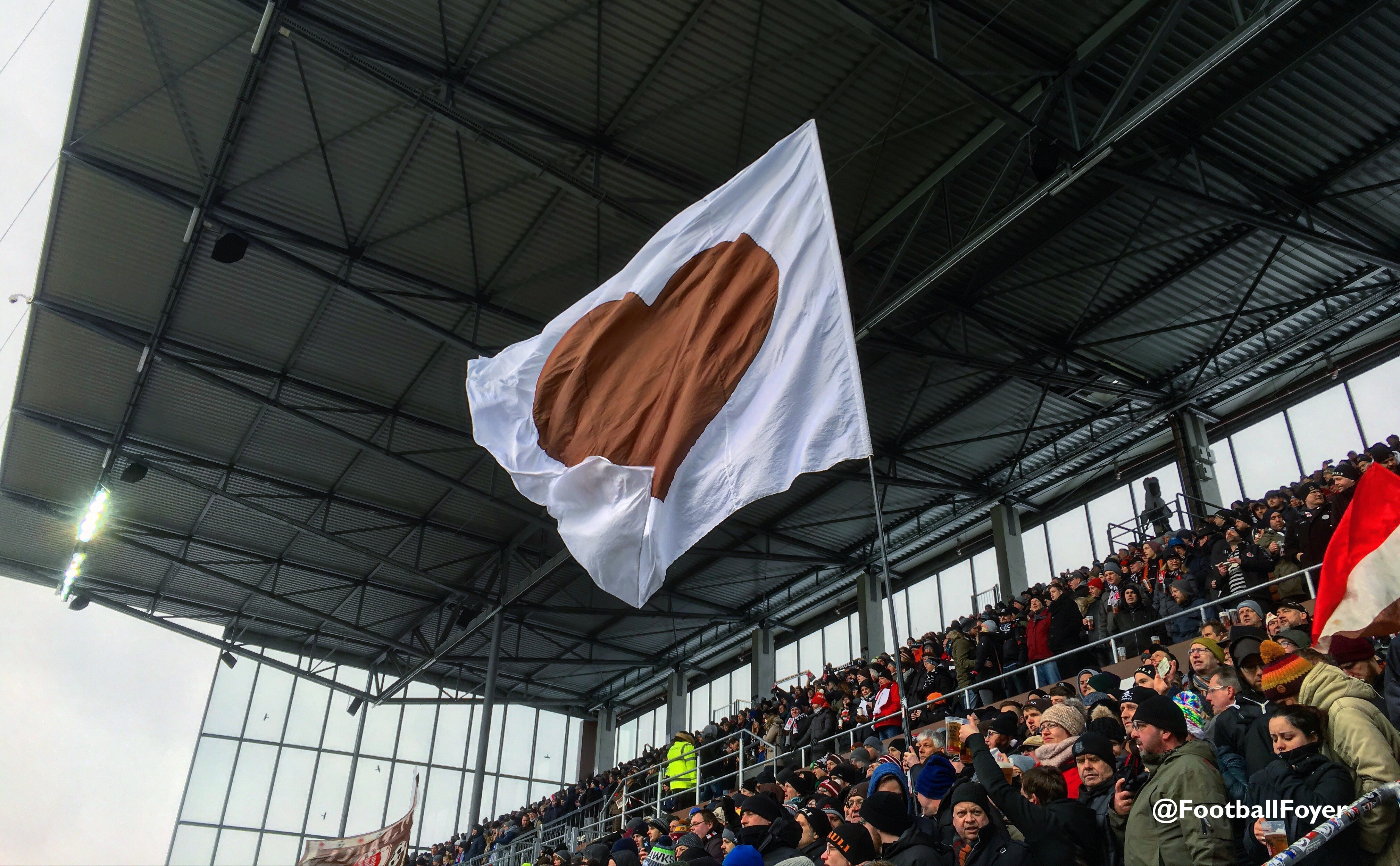
As half-time approached, a large heart shaped flag was unfurled to the back of our stand. Simple in design, but effective in message. Being an FC St. Pauli follower is all about the love, and certainly no hatred.
The visitors’ swift second-half start threatened to turn the match into a Holsten Kiel rout. FC St. Pauli, however, dug deep, holding their own and, in due course, brought about their just reward.
With a quarter of an hour left to play, the home side nicked an equaliser. The ball was flicked over the right-sided Kiel defender, onto the arriving left-footed half volley of Richard Neudecker. The ball rocketed into the net, hit so sweetly that ripples were felt 30km down the road in Kiel. St. Pauli were level. From this point on, you felt there could only be one winner.
As added time approached, FC St. Pauli were awarded a corner. An inswinging near-post ball is met by the head of Christopher Avevor – who had excelled throughout the match – and beats Holsten Kiel goalkeeper, Kenneth Kronholm.
The Millerntor-Stadion erupts as their side completed an emphatic turnaround. Their rivals were dead on their feet.
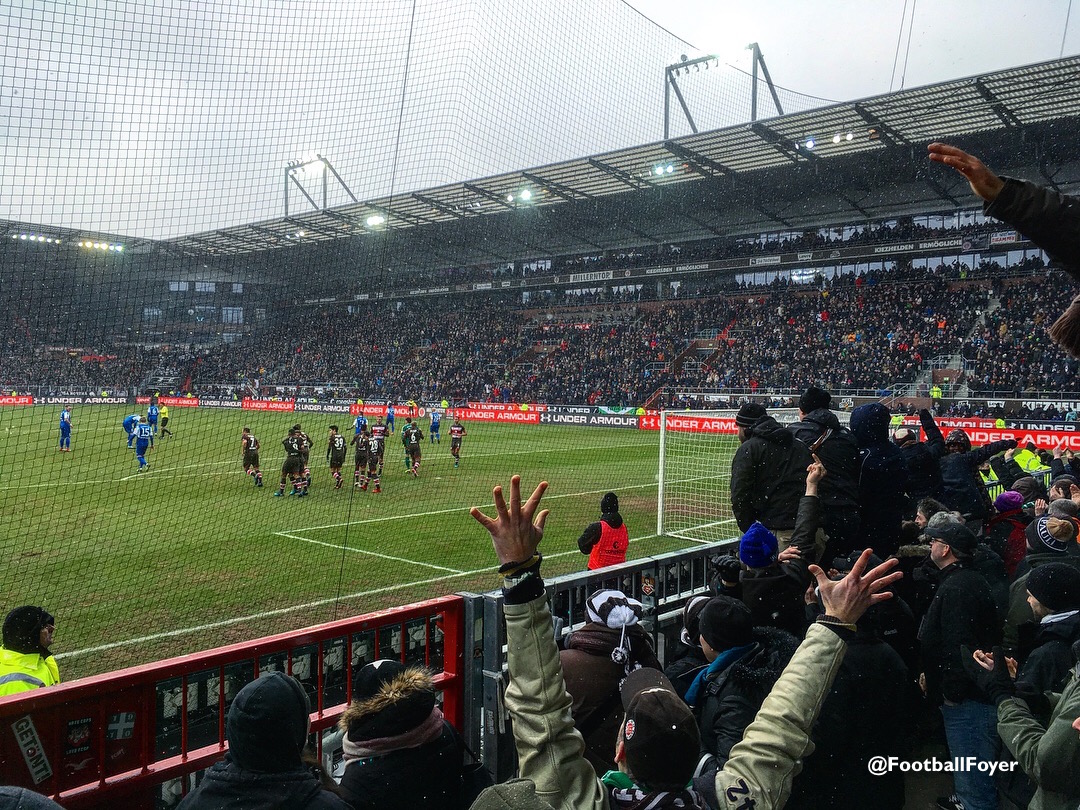
At full-time, the atmosphere spilled into the streets. Fans celebrated together, no animosity between the two sets of supporters—just appreciation for the footballing spectacle they had witnessed.
Unfortunately, I had to head back to Berlin soon after the final whistle. But I’m reliably told the St. Pauli faithful partied long into the night—David Bowie’s Let’s Dance and €3 Riesling flowing at a nearby wine bar.
The Millerntor-Stadion offers a truly alternative football experience. FC St. Pauli and their fans lead by example—bringing peace and solidarity to the game while maintaining ambitions of returning to the Bundesliga.
As one fan, on his second visit to the Millerntor, put it:
“Everyone needs a home – and I’ve found mine.”




 Football Foyer
You must be logged in to post a comment.